

The Content Operations Platform
Power content applications and AI workflows at scale. Every application, one platform.
Trusted by leaders and innovators
























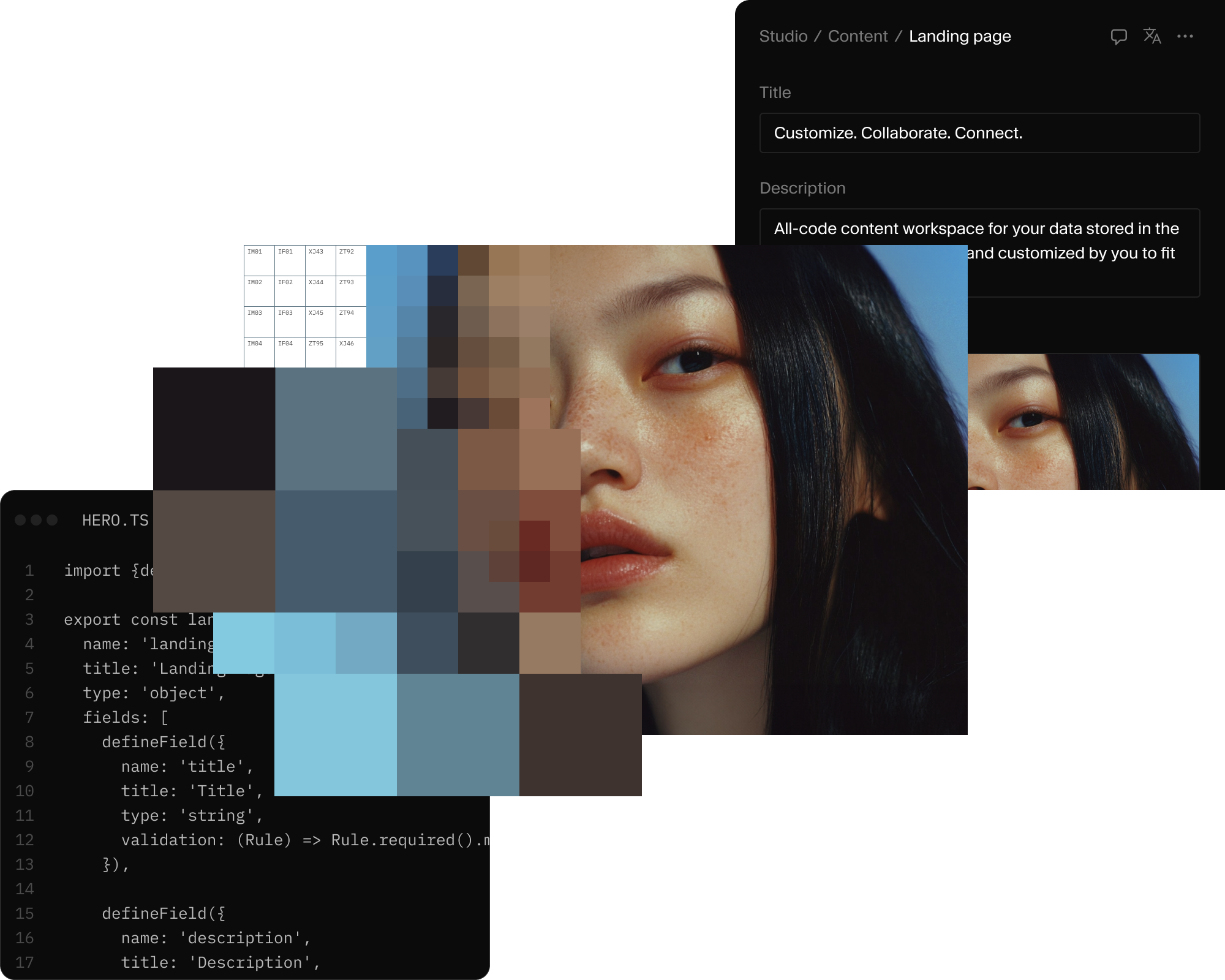
Mirror how your content operations team works
Page title
Page description goes here
import {defineField, defineType} from 'sanity'

export const heroType = defineType({
  name: 'hero',
  title: 'Hero',
  type: 'document',
  fields: [
    defineField({
      name: 'title',
      title: 'Title',
      type: 'string',
      validation: (Rule) => Rule.required(),
    }),
    defineField({
      name: 'description',
      title: 'Description',
      type: 'text',
      rows: 3,
    }),
    defineField({
      name: 'image',
      title: 'Image',
      type: 'image',
      options: {
        hotspot: true,
      },
      fields: [
        {
          name: 'alt',
          type: 'string',
          title: 'Alternative text',
          description: 'Important for SEO and accessibility.',
        },
      ],
    }),
  ],
  preview: {
    select: {
      title: 'title',
      subtitle: 'description',
      media: 'image',
    },
  },
})No changes yet
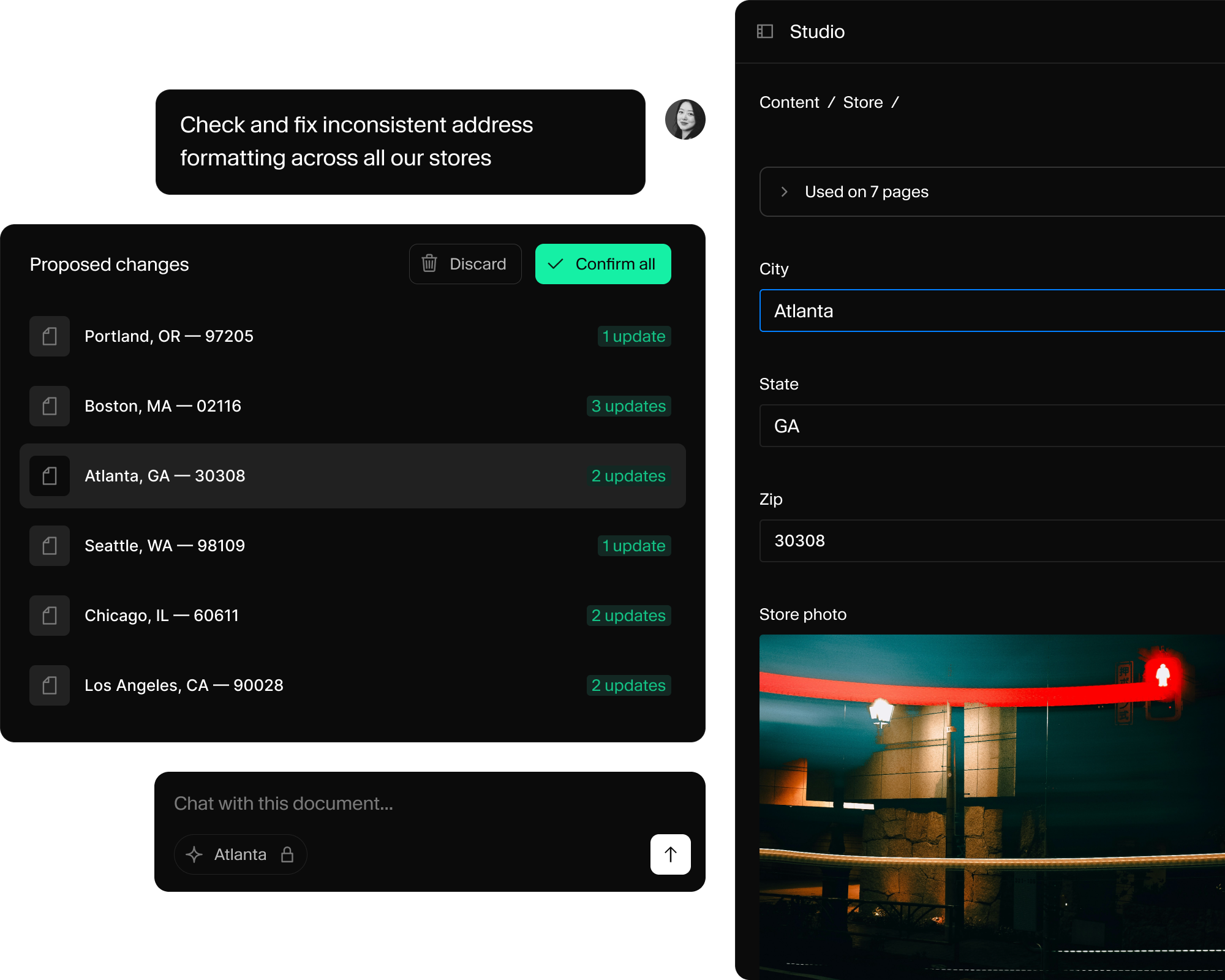
Content Operations without the busywork
Agent actions, functions, and content agents automate manual work before and after hitting publish.

@Jason published a new product: ST07 Winter Jacket
import {documentEventHandler} from '@sanity/functions'
import {createClient} from '@sanity/client'

const STOREFRONT_WEBHOOK = process.env.STOREFRONT_WEBHOOK_URL

export const handler = documentEventHandler(async ({context, event}) => {
  const {data} = event

  if (!STOREFRONT_WEBHOOK) {
    console.error('❌ STOREFRONT_WEBHOOK_URL not found in environment variables')
    return
  }

  const client = createClient({
    ...context.clientOptions,
    apiVersion: '2025-06-01',
  })

  // Find every document that references the published product
  const referencing = await client.fetch(
    `*[references($id)]{
      _id,
      _type,
      title,
      "slug": slug.current
    }`,
    {id: data._id},
  )

  if (!referencing.length) {
    console.log(`📭 No references found for ${data._id}`)
    return
  }

  console.log(`🔗 Found ${referencing.length} documents referencing ${data._id}`)

  // Notify the storefront so it can rebuild affected pages
  try {
    const response = await fetch(STOREFRONT_WEBHOOK, {
      method: 'POST',
import {documentEventHandler} from '@sanity/functions'
import {createClient} from '@sanity/client'
const STOREFRONT_WEBHOOK = process.env.STOREFRONT_WEBHOOK_URL
export const handler = documentEventHandler(async ({context, event}) => {
const {data} = event
if (!STOREFRONT_WEBHOOK) {
console.error('❌ STOREFRONT_WEBHOOK_URL not found in environment variables')
return
}
const client = createClient({
...context.clientOptions,
apiVersion: '2025-06-01',
})
// Find every document that references the published product
const referencing = await client.fetch(
`*[references($id)]{
_id,
_type,
title,
"slug": slug.current
}`,
{id: data._id},
)
if (!referencing.length) {
console.log(`📭 No references found for ${data._id}`)
return
}
console.log(`🔗 Found ${referencing.length} documents referencing ${data._id}`)
// Notify the storefront so it can rebuild affected pages
try {
const response = await fetch(STOREFRONT_WEBHOOK, {
method: 'POST',Power anything. One API, every platform
Turn your content into a governed knowledge layer that powers applications and AI agents.
Everything your team needs in one place
The database optimized for content operations
Store any valid JSON document, with schemas living in your Sanity Studio configuration, not as database constraints.
- Schema as code
- Query anything
- Update with precision
- Manage different environments



Content workflows that mirror how you work
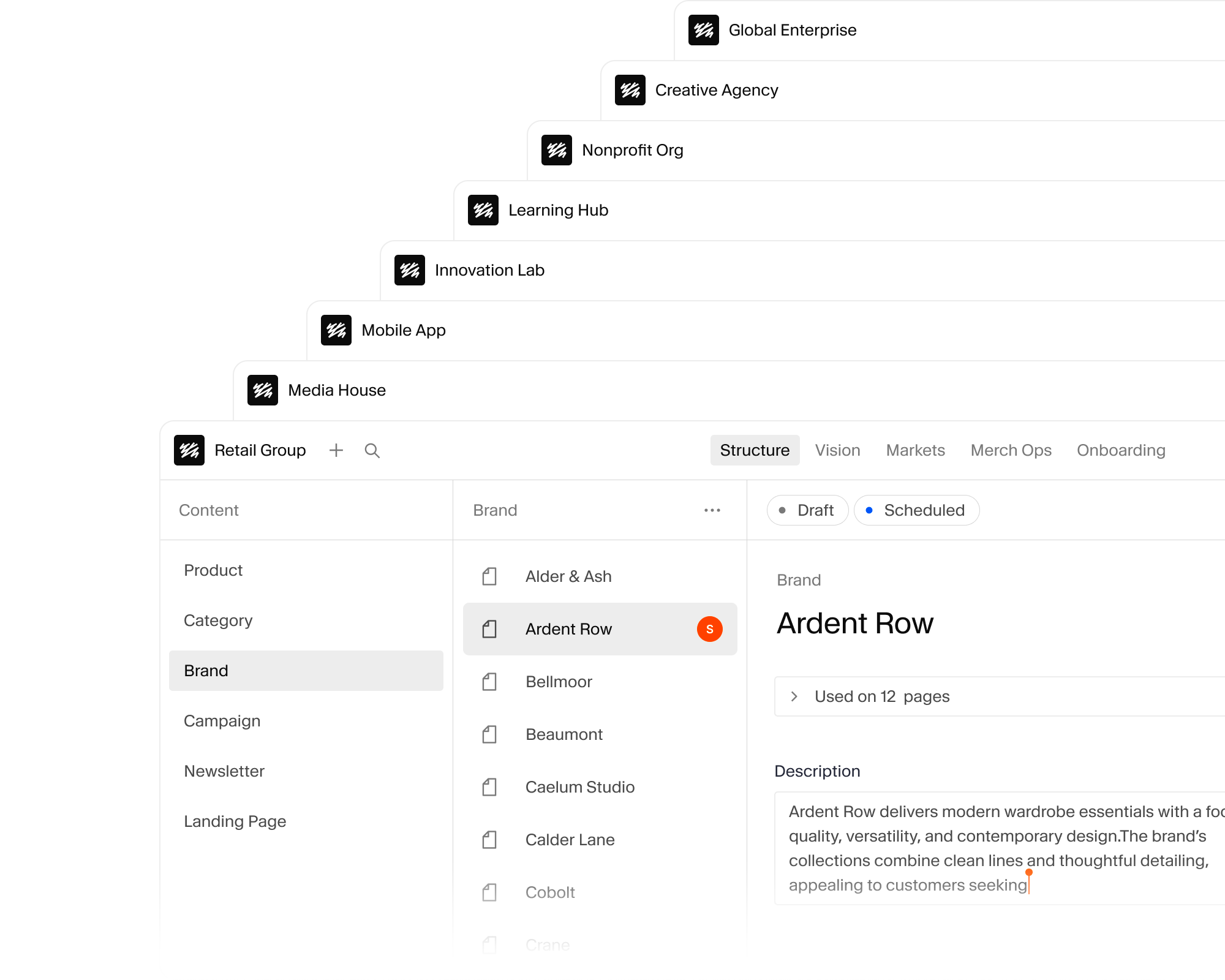
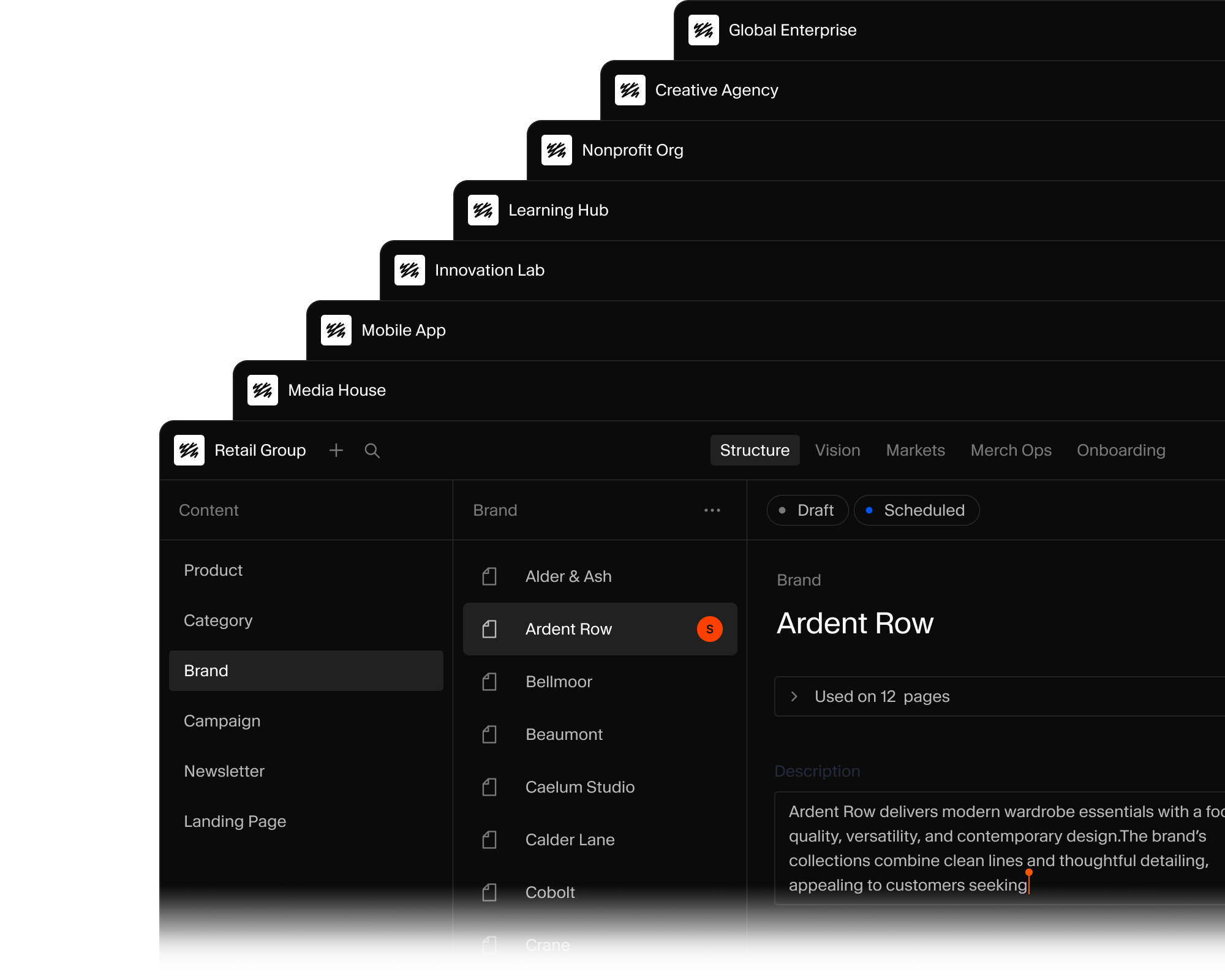
Enable creative freedom with infinitely customizable workflows.
- A modern content studio
- Custom content applications with App SDK
- Preview content in context
- Content releases with precision
- Multiplayer-editing for teams


An agent to run content operations at scale
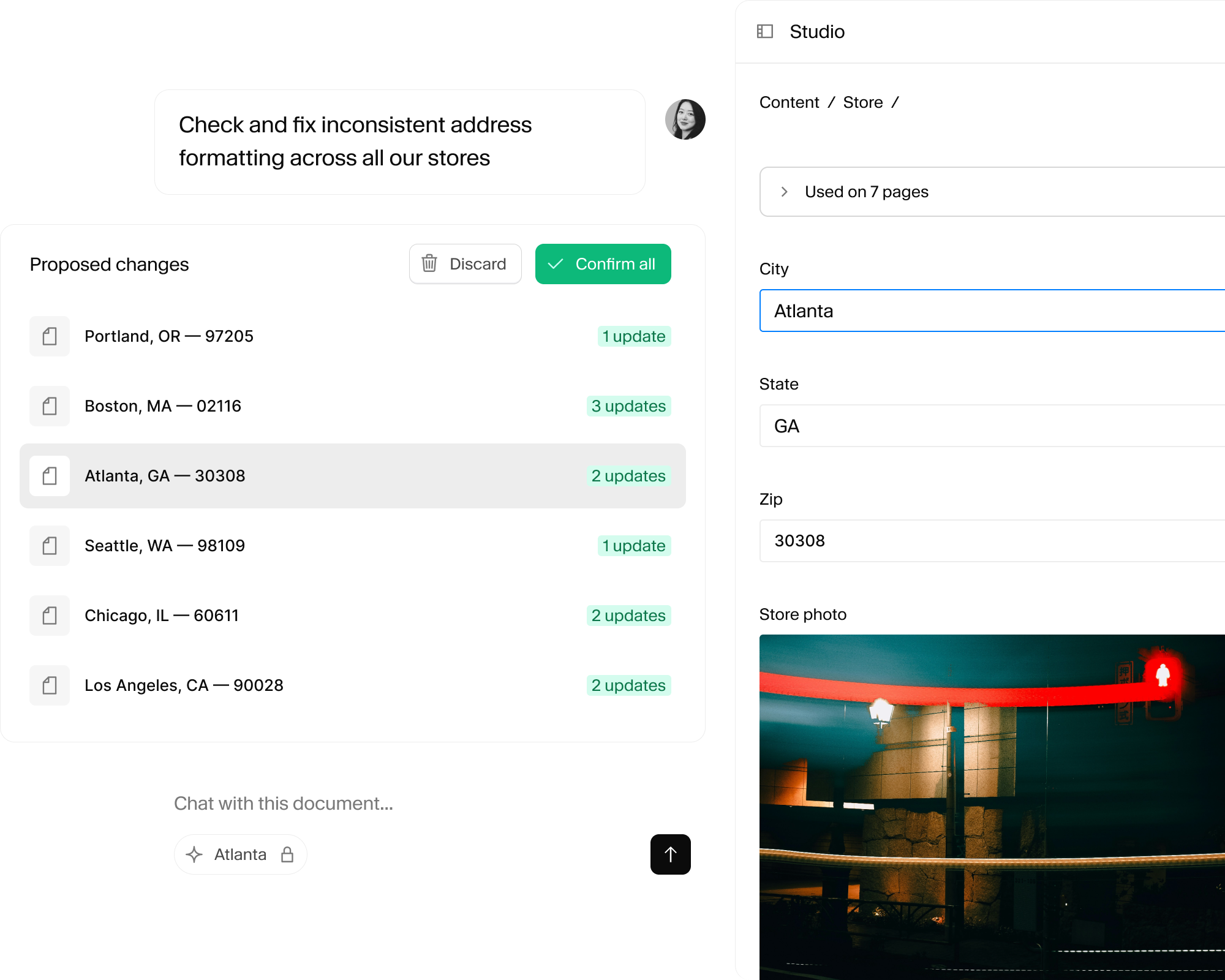
The first content agent that knows your content, so you can action with accuracy at scale.
- Transform source materials into structured content
- Audit and edit content at scale
- Edit visuals with natural language
- Research trends and topics
- Prepare changes for revision


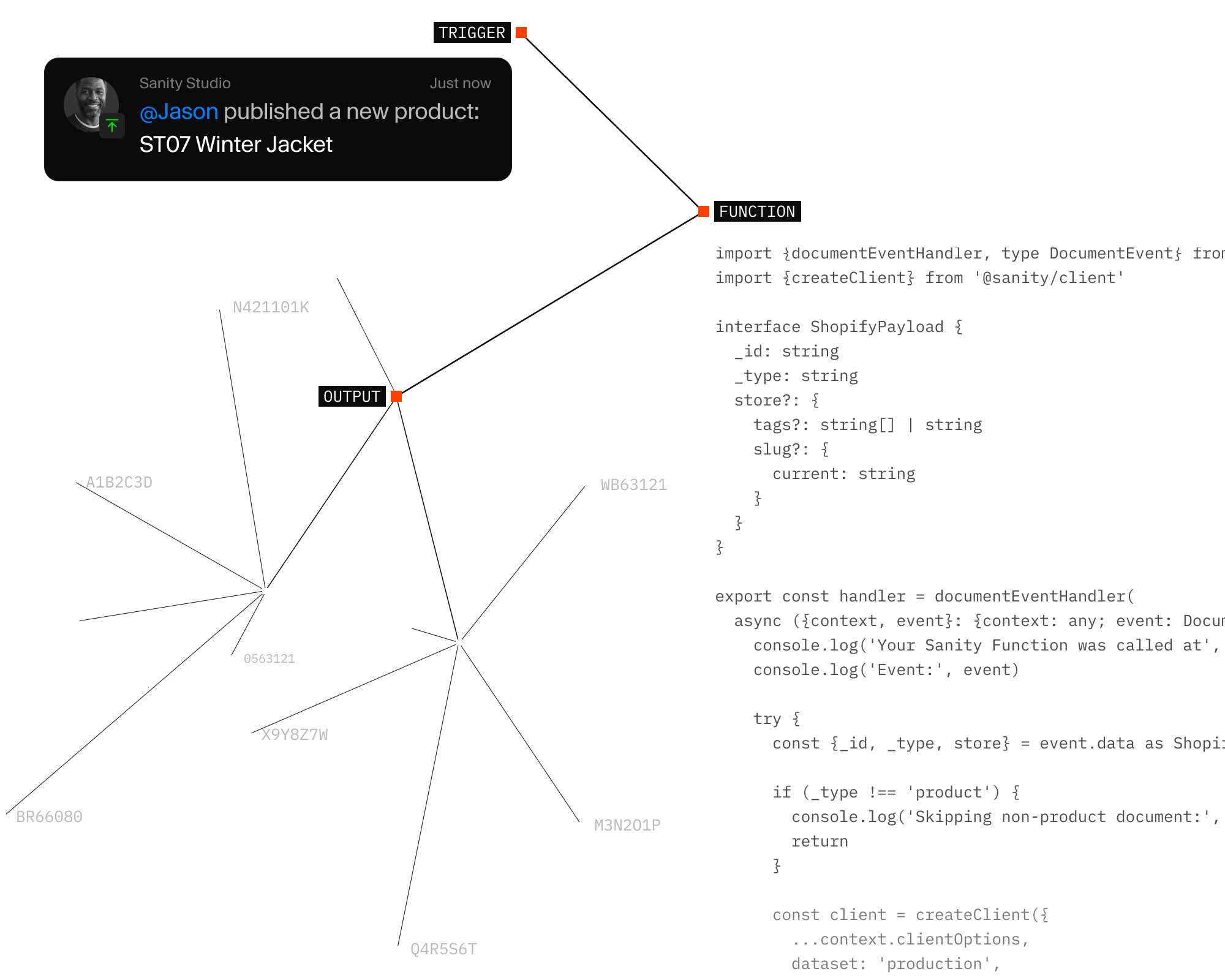
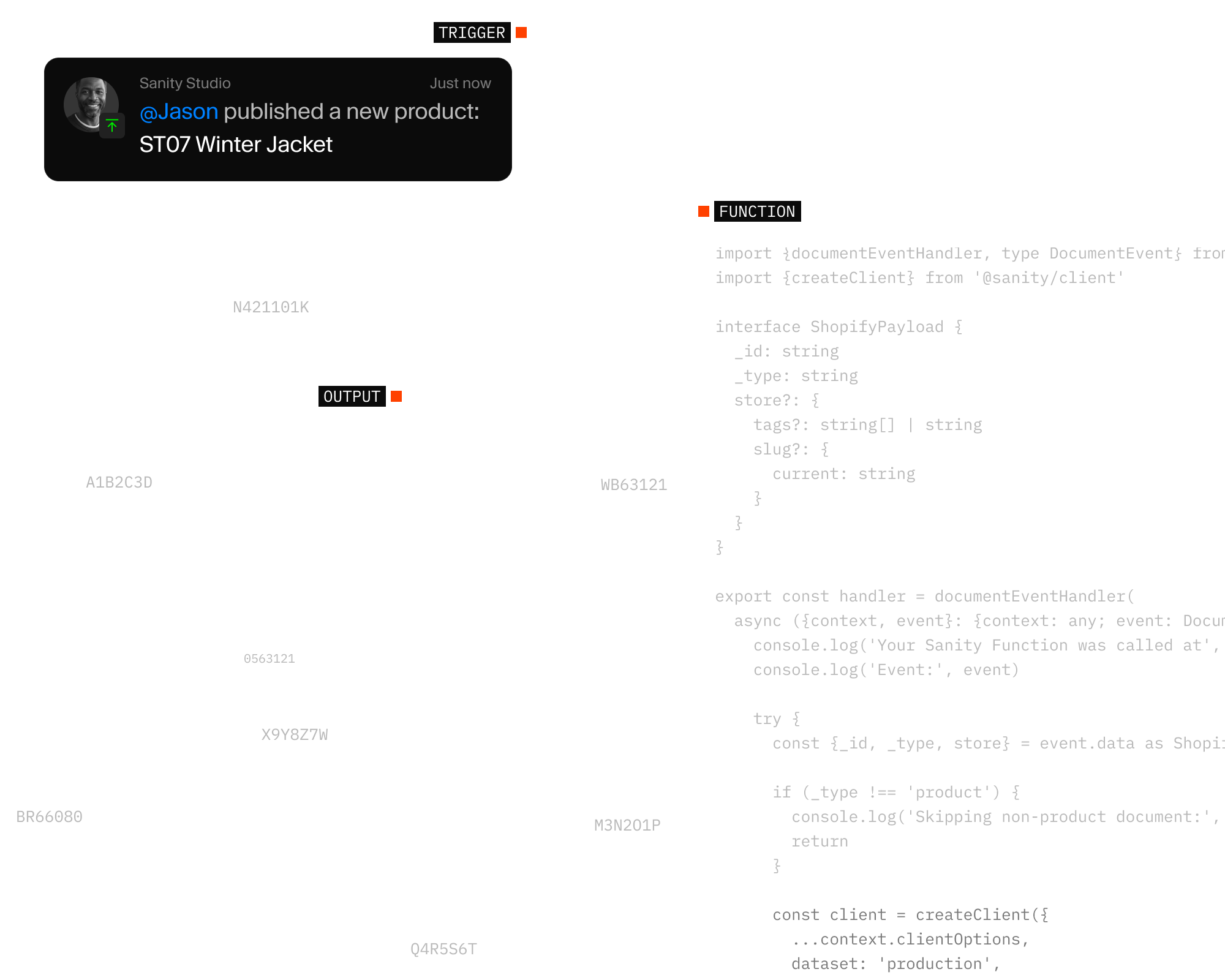
Programmable automation
Automate content operations, from AI enrichment to syncing with any system, triggered by any mutation in your dataset.
- Event driven automation
- Full access to your content
- Any possible “If this, then that” combination
- Agent Actions for schema-aware AI automations
- Write once, use everywhere


Power web, mobile, or your own agent
Now, with Sanity you can power not only web and content applications but your own agents. Structured data that powers intelligence.
- Structured content to agentic reasoning
- Build your own customer-facing or internal agents
- Agentic workflows
- Or power any web surface or content application



Loved by 1M+ users and 6k+ teams

0
0 custom APIs
300%
Faster release cycles
90%
of updates owned by the content team

5x
faster dev velocity
144x
faster product launches
10k
products updated in 30 seconds
80
hours saved per month
60
lines of code
Zero
added services
“Lady Gaga’s team had never used a CMS before. Now they are logging into Sanity and using Sanity Studio to make updates on their own.”
Melody YungCreative Lead & Founder at Yung Studio
“I want to build tools and systems where I never have to say 'no, I can't do that.' The question becomes 'should we do that?' And if yes, we have the stack and the ability to go do it.”
Kevin HarwoodCTO at Tecovas
“We have a marketplace and partner with a lot of brands — commerce is definitely the next big initiative for us. We're essentially becoming multiple companies at once.”
Anthony RiveraDirector of Engineering at Complex at Complex



Enterprise-grade everything
Model, manage, automate, and scale structured content across all your brands, apps, and touch points.

SOC 2 Type II

GDPR

CCPA
Less talk, more code
CLI Install
Install Sanity and create a new project directly from your terminal.
MCP Server
Connect Sanity to your favorite tools like Cursor, Claude Code, v0, and more.


Agent toolkit
Best-practice Sanity skills for AI agents and popular frameworks.


