What is an API? Types, Tools and Security Basics
An API CMS is a decoupled content management system that delivers content via an API, allowing for multichannel presentation and more flexible digital experience management.

Joe Holmes
Software Developer and Technical Writer
Last Edited:
To understand why an API-first CMS makes such a powerful addition to your project, let’s first look at how a conventional CMS delivers content.
A conventional CMS is designed as a monolithic stack, where a single back-end data source supplies a single front-end presentation. Both are usually part of one unified application.
The way this system stores content is optimized for its editing experience and its specific website templating engine. Often, specific presentation considerations are stored intermingled with your authored content.
An API-first CMS is a decoupled content management system that delivers content via an API, allowing for multichannel presentation and more flexible digital experience management. The API makes it easy to integrate with a wide variety of web frameworks like Next.js, Nuxt.js, Gatsby, and more.
But, hold on...
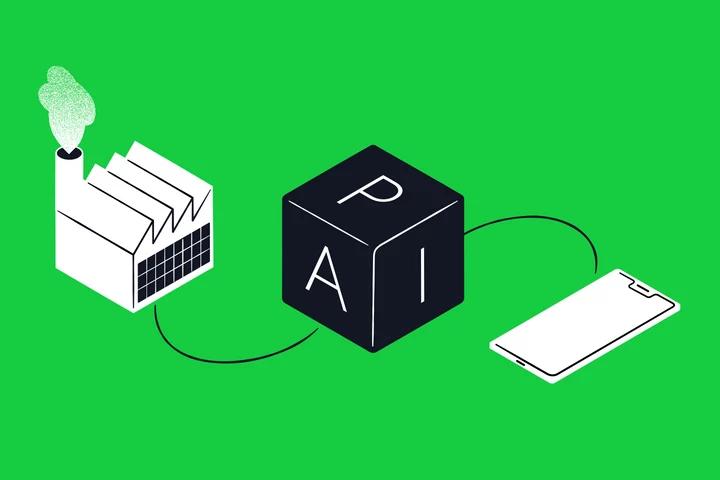
An API is a protocol that enables two pieces of software to communicate with one another: plug one application into another via an API, and they’re suddenly able to cooperate. By providing a shared language they can agree on, an API allows totally different apps to work together, even if they’re on different servers, in different programming languages, in different parts of the world.
Think of an API, short for Application Programming Interface, like an outlet on your wall. Instead of providing electricity to appliances you plug into it, an API provides data to applications you plug into it.
By serving data from one application to another, APIs connect the world of software and let companies and applications coordinate across multiple domains.
→ Learn more about what is an API
While convenient (and revolutionary at the time of their invention), traditional CMS architectures have a hard time keeping up with the speed of modern web development. Your content is chained to a single web presence, and serving it in multiple contexts or changing your front-end tech stack is either cumbersome or off the table entirely.
Wouldn't it be nice if you could serve content as data, so it could be consumed by any number of front ends, custom applications, and AI agents? If that were your back end, you’d be free to build your digital presence into anything you wanted and scale it without a headache.
API-first CMSes and content platforms make this possible. With content APIs, you’re no longer tethered to a single, monolithic CMS architecture. Your back end can become an extensible, powerful application in its own right, and you can adapt and scale your business at will.
Instead of tethering your content to a single front-end presence, an API-first CMS provides the interface into which numerous front ends can plug in.
Phones, websites, apps, TV channels, augmented reality displays, AI agents, and anything else that can consume an API now has access to your content, which can be crafted and engineered to fit your exact business needs.
Because the only interface exposed to the presentation layer is the API itself, your back end is much more secure. You can also more easily connect it to analytics, CRM, project management tools, and other vital parts of your business.
Every web developer knows how fast the landscape changes. Often the latest web tools are faster, easier, and more scalable than their predecessors. When it’s time to pivot on presentation, you don’t have time to lose, and you can’t afford any back-end headaches.
In an API-first CMS, swapping out front ends makes no difference to your project’s source of truth. The same API route serves the same payload, as always. No headaches, just shipping your work and iterating. If you need to move fast, whether to hit publishing targets, pivot to different media or market segments, or grow quickly, an API-first CMS can significantly reduce your workload.
That flexibility matters even more now that AI is part of the picture. When your content is structured and API-accessible, it can feed AI agents and automation workflows just as easily as it feeds a website. A monolithic CMS can’t do that.
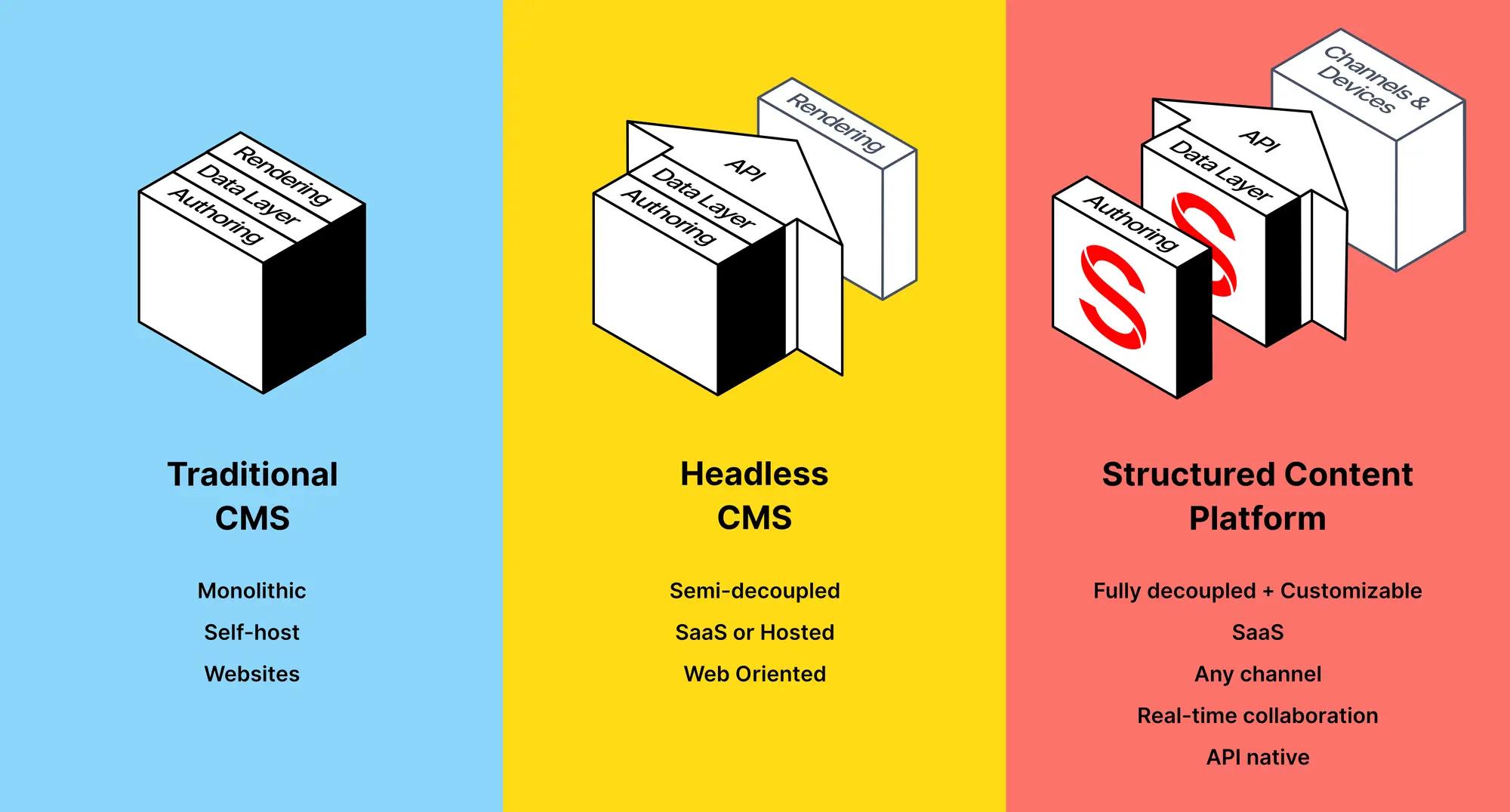
In the past, top teams needed to design their own content back ends if they wanted the flexibility that an API-first CMS provides. To expose custom endpoints for a content management system, senior developers would need to code most of their tools in-house. These systems were time-consuming, expensive, and required expert care and maintenance.
With an API-first CMS like Sanity, that entire process gets much easier and faster. New input components, data types, and content models can easily be written by junior developers with only a few lines of code, dramatically reducing time to market. What once required months of custom development and senior engineering resources can now be implemented in days.
Sanity is the Content Operating System built for teams running content operations at scale. The API-first architecture is just the foundation. On top of it, you get a structured content back end, a fully customizable editorial environment (Sanity Studio), and the automation and AI tools to keep content moving without piling on headcount.
Content is stored as structured JSON in Content Lake, queryable with GROQ, and deliverable to any channel or application via API. That structure is what makes content useful not just for websites, but for AI agents, automation pipelines, and anything else you need to power.
Where traditional CMSes stop at publishing, Sanity operates content end-to-end: from modeling and authoring to workflow automation, agentic delivery, and real-time updates across every surface.